
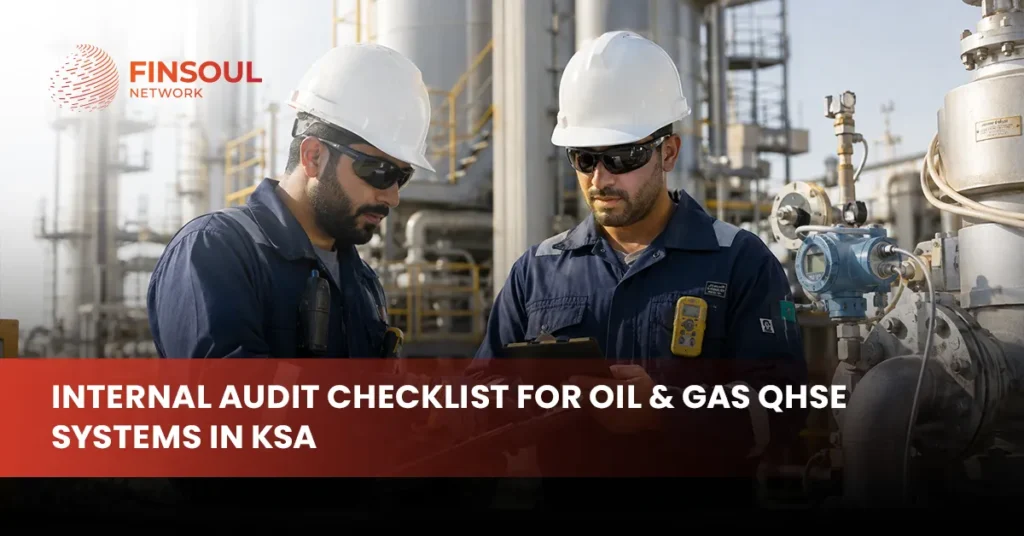
Saudi Arabia’s energy sector operates under some of the strictest quality, health, safety, and environmental standards in the world. For any operator, contractor, or service provider, a structured internal audit for oil and gas Saudi Arabia program is no longer optional; it is the backbone of regulatory compliance, operational safety, and long-term business continuity.
At Finsoul Network KSA, we work with facilities across the Kingdom to build audit systems that hold up under scrutiny from Aramco, SASO, and international certification bodies alike. This guide breaks down the subtopics you need to understand to build a complete, high-authority internal audit checklist oil and gas teams can rely on.
What Is an Internal Audit in the Oil & Gas Sector?
An internal audit is a systematic, independent review of a facility’s Quality, Health, Safety, and Environment (QHSE) management systems. In the context of Saudi Arabia’s energy industry, an internal audit for oil and gas Saudi Arabia verifies that operations align with national regulations, Aramco engineering standards, and globally recognized ISO frameworks. Unlike external audits performed by certification bodies, internal audits are conducted by in-house or third-party specialists before external assessments take place, giving organizations the chance to identify and close gaps early.
Why Internal Audits Matter for QHSE Compliance in Saudi Arabia
The Kingdom’s Vision 2030 industrial expansion has placed oil and gas facilities under closer regulatory watch than ever. A well-executed oil and gas compliance audit Saudi Arabia protects workers, prevents environmental incidents, and safeguards company reputation. Beyond regulatory necessity, audits reduce insurance costs, minimize downtime caused by unresolved non-conformities, and strengthen a company’s standing when bidding for Aramco-approved vendor contracts.
Regulatory Framework Governing Oil & Gas Audits in KSA
Any credible internal audit for oil and gas Saudi Arabia must reference the correct regulatory landscape. This includes:
- Saudi Aramco Engineering Standards (SAES) and Aramco Vendor Qualification requirements
- Saudi Standards, Metrology and Quality Organization (SASO) regulations
- National Center for Environmental Compliance (NCEC) requirements
- General Organization for Social Insurance (GOSI) occupational safety mandates
- International ISO frameworks adopted locally through the Saudi Accreditation Center
Understanding how these bodies interact with one another is essential before drafting an audit scope. Auditors also need to track periodic circulars and technical bulletins issued by Aramco, since standards are revised regularly and outdated checklists can lead to false assurance during a review. Facilities operating joint ventures with international partners often layer in additional home-country requirements, which makes a documented, version-controlled regulatory register a practical starting point for any audit team.
Key Components of an Internal Audit Checklist for Oil and Gas
A comprehensive internal audit checklist oil and gas facilities should be divided into distinct management system components:
Quality Management (ISO 9001)
Reviewing documentation control, supplier qualification, and process consistency across drilling, refining, or midstream operations.
Occupational Health & Safety (ISO 45001)
Covering permit-to-work systems, PPE compliance, incident reporting, and contractor safety induction records.
Environmental Management (ISO 14001)
Assessing waste handling, emissions monitoring, spill response plans, and water usage tracking.
Process Safety Management
Evaluating hazard identification, risk assessments (HAZOP), and mechanical integrity programs for high-risk equipment.
Emergency Preparedness & Response
Testing evacuation drills, firefighting readiness, and communication protocols during simulated incidents.
Documentation and Records Management
Verifying that permits, training certificates, maintenance logs, and prior audit reports are complete, current, and easily retrievable during a surprise inspection. Poor recordkeeping is one of the most common reasons facilities lose points during vendor requalification, even when actual field practices are sound.
Step-by-Step Internal Audit Process
- Planning – Define scope, objectives, and applicable standards for the internal audit for the oil and gas Saudi Arabia engagement.
- Document Review – Examine policies, procedures, permits, and previous audit records.
- On-Site Assessment – Conduct interviews, facility walkthroughs, and equipment inspections.
- Findings & Gap Analysis – Categorize non-conformities by severity and regulatory impact.
- Corrective Action Planning – Assign responsibility and deadlines for closing gaps.
- Follow-Up Verification – Confirm corrective actions were implemented effectively.
Common Non-Conformities Found During an Oil and Gas Compliance Audit
Recurring issues uncovered during an oil and gas compliance audit Saudi Arabia include outdated permit-to-work documentation, incomplete contractor safety training records, missing calibration certificates for monitoring equipment, and gaps between written procedures and actual field practice. Identifying these patterns early through a consistent internal audit for oil and gas Saudi Arabia schedule prevents them from escalating into major non-conformities during external certification audits.
ISO Internal Audit KSA: Certification & Standards Alignment
Many operators pursue an iso internal audit ksa approach to align internal reviews directly with ISO 9001, 14001, and 45001 certification cycles. This alignment ensures internal findings map cleanly onto external audit criteria, reducing surprises during surveillance or recertification visits. An integrated iso internal audit ksa framework also simplifies reporting for multinational operators managing facilities across several regions.
Certification bodies also expect to see objective evidence of continual improvement between cycles, not just a stack of closed findings. A well-run internal review program treats each audit as an input into management review meetings, ensuring that leadership actively steers resource allocation toward the highest-risk areas identified by auditors.
Best Practices for Conducting Internal Audits in Oil & Gas Facilities
- Schedule audits quarterly rather than annually for high-risk facilities
- Train internal auditors to recognize Aramco-specific documentation requirements
- Use standardized checklists to ensure consistency across audit teams
- Involve frontline workers, not just management, in interviews
- Track corrective action closure rates as a key performance indicator
- Benchmark findings across facilities to spot systemic, rather than isolated, weaknesses
- Rotate auditors periodically so fresh eyes review long-standing procedures
How Digital Tools Improve Audit Accuracy
Modern internal audit for oil and gas Saudi Arabia programs increasingly rely on digital audit management platforms. These tools reduce paperwork, timestamp evidence photos, flag overdue corrective actions automatically, and generate audit trails that satisfy both Aramco and ISO documentation requirements, cutting audit cycle time significantly compared with manual, paper-based methods. Dashboards that display open findings by facility, risk category, and due date also give senior leadership real-time visibility into compliance health, rather than waiting for a quarterly summary report that may already be outdated by the time it reaches decision-makers.
Choosing the Right Internal Audit Partner in Saudi Arabia
Selecting an experienced partner matters as much as the checklist itself. Look for auditors with proven Aramco vendor experience, certified ISO lead auditor credentials, and a track record across upstream, midstream, and downstream facilities. The right partner turns a routine internal audit for oil and gas Saudi Arabia into a strategic advantage rather than a compliance burden.
Benefits of a Strong Internal Audit Program
A well-structured internal audit program helps oil and gas organizations maintain compliance while continuously improving safety, quality, and environmental performance. It also provides management with clear visibility into operational risks and areas that need improvement.
- Identifies compliance gaps before they become major issues.
- Improves workplace health and safety performance.
- Supports readiness for Aramco, ISO, and regulatory audits.
- Helps reduce operational risks and prevent incidents.
- Ensures corrective actions are properly tracked and closed.
- Improves QHSE documentation and recordkeeping.
- Builds confidence among clients, regulators, and business partners.
- Encourages a proactive safety and risk-management culture.
Conclusion
Building a resilient QHSE system starts with a disciplined audit program that facilities can apply consistently across every site. From regulatory alignment to digital audit tools, every subtopic covered here strengthens your organization’s readiness for Aramco vendor reviews and ISO certification cycles. Finsoul Network KSA helps operators across Saudi Arabia design, implement, and manage internal audit programs that meet the highest QHSE standards, turning compliance into a competitive advantage rather than a checkbox exercise.
Is Your Facility Ready for Its Next Audit?
Find compliance gaps before they become costly non-conformities. Finsoul Network KSA provides professional internal audit support for oil & gas facilities across Saudi Arabia, helping organizations improve QHSE performance and prepare for Aramco, ISO, and regulatory audits.
Book your QHSE internal audit consultation today and take the next step toward stronger compliance and safer operations.
Our Location
Office 201 (4th Floor), SQ Tower, GCC Road, Al Khuzamah, Eastern Province, Al Khobar, Kingdom of Saudi Arabia
Email
info@finsoulnetwork.com
Contact
+966 54 865 6146
Frequently Asked Questions
How often should oil and gas companies conduct internal audits in KSA?
High-risk facilities should audit quarterly, while lower-risk operations can follow a semi-annual or annual cycle depending on regulatory requirements.
What standards does an internal audit checklist oil and gas typically cover?
Most checklists cover ISO 9001, ISO 14001, and ISO 45001, alongside Aramco-specific engineering and vendor standards.
Who can perform an internal audit for oil and gas Saudi Arabia?
Trained internal staff or accredited third-party consultants with ISO lead auditor certification can conduct these audits.
What happens after non-conformities are identified?
Auditors document findings, assign corrective action owners, set deadlines, and verify closure during follow-up reviews.
Does an internal audit replace external ISO certification audits?
No, internal audits prepare facilities for external audits but do not replace the formal certification process performed by accredited bodies.