
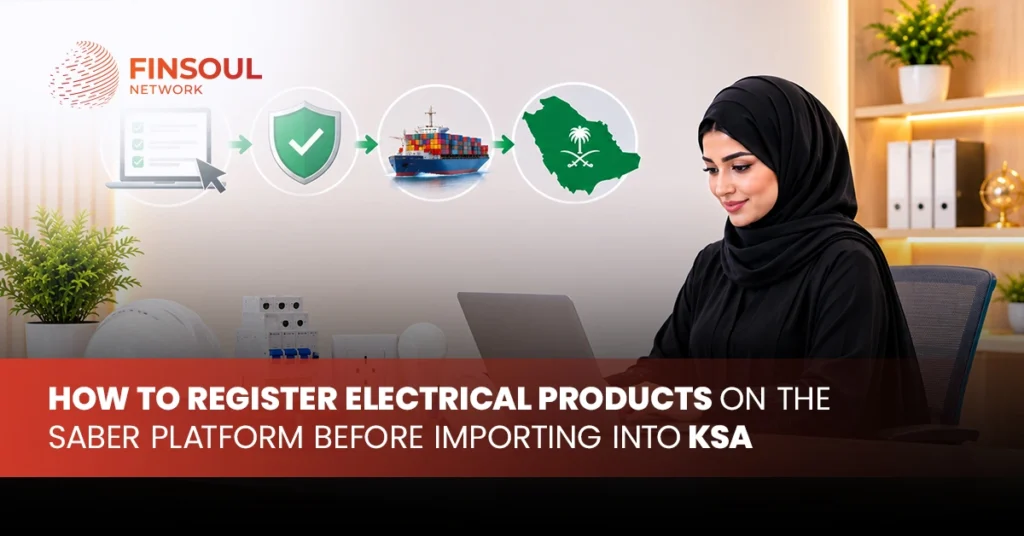
Shipments of electrical goods get stuck at Saudi ports every week, and the cause is usually the same: a missing conformity record. This guide explains SABER registration for electrical products on the SABER platform before importing into KSA, so your cargo clears customs the first time.
At Finsoul Network KSA, we help importers turn SABER registration for electrical products from a stressful hurdle into a predictable routine.
The Problem: Why Electrical Cargo Gets Stuck at Saudi Ports
Saudi Arabia does not allow regulated electrical goods onto the market without proof that they meet national technical rules. That proof is issued through the SABER platform Saudi Arabia uses to control imports of regulated products. If a shipment arrives without a valid record, customs holds it, and storage charges start the same day.
Most delays come from three causes:
- The product was never registered, or it was registered under the wrong category.
- The importer assumed the manufacturer’s overseas test report was enough.
- The certificate was issued, but its details do not match the commercial invoice.
What You Risk Without Product Registration on SABER
Skipping Product registration on SABER is rarely a small mistake. A held container can cost thousands of riyals in demurrage, and a rejected consignment may have to be re-exported at your own expense. Repeated problems can also damage your reputation with buyers and authorities.
Think of it this way: registration costs a fraction of one delayed container. Doing it early is the cheapest insurance an importer can buy.
Who Needs to Act, and When
Both importers and overseas manufacturers can hold a SABER account, but the importer carries the final responsibility at the border. If you buy from a factory that already has approved models, ask for their certificate numbers first. This can shorten your timeline considerably.
A realistic timeline looks like this:
- Week 1: confirm the HS code, regulation, and account access.
- Weeks 2 to 3: register the product and send samples for testing.
- Weeks 4 to 5: receive the certificate and prepare the shipment request.
- Week 6: share the records with your supplier and clearing agent.
Before you place a purchase order, read through how to complete SABER registration for electrical products so that your supplier knows which documents, labels, and samples you will need. Sharing this plan early prevents the back-and-forth that eats up days later. Planning backwards from your shipping date is the simplest way to stay on schedule. It also gives you room to fix a rejected file without panic.
The Solution: SABER registration for electrical products Before Importing into KSA
The six steps below show how to complete SABER registration for electrical products without guesswork. Follow them in order and keep copies of every file you upload.
Step 1: Identify the Technical Regulation for Your Product
Find your product’s HS code, then check which Saudi technical regulation covers it. Lighting, household appliances, cables, and low-voltage equipment each follow different rules. This decision sets the conformity route you must take, so confirm it before anything else.
Step 2: Create Your Importer or Manufacturer Account
Open an account on the SABER platform Saudi Arabia provides, using your commercial registration details. Store the login credentials safely, because the same account is used for every later request, from registration to shipment approval.
Step 3: Register the Product Details
Enter the brand, model number, HS code, technical specifications and country of origin. Accuracy matters here, because the Saudi product conformity certificate will repeat these details exactly. One wrong model name can force you to restart the process.
Step 4: Complete Testing and Conformity Assessment
Send the product to an approved conformity assessment body. Prepare the test reports, product labels, and a user manual in Arabic and English. Products that pass are cleared for certificate issuance.
Step 5: Obtain the Certificate and Shipment Document
After approval, you receive the Saudi product conformity certificate. For every shipment, you then request a shipment certificate linked to that consignment’s invoice. Customs checks this document at the port, which makes SABER registration for electrical products a gate you must pass on every single order, not only the first.
Step 6: Share the Records Before the Goods Ship
Send the certificate number to your supplier and your clearing agent before loading begins. A shipment that leaves without these details is the most common source of avoidable delays.
Documents to Keep Ready
Keep this checklist beside you during SABER registration for electrical products:
| Document | Purpose | Who Prepares It |
| Product technical file | Proves specifications and safety design | Manufacturer |
| Test report | Confirms the product meets the regulation | Approved laboratory |
| Product registration record | Links the model to its HS code | Importer or manufacturer |
| Conformity certificate | Allows the product to enter the market | Conformity assessment body |
| Shipment certificate | Clears each individual consignment | Importer through SABER |
Mistakes That Slow Down Your Approval
Most rejections are caused by small errors, not complicated rules. Watch for these:
- Wrong HS code: it sends your product down the wrong conformity route.
- Expired certificates: a valid document last year may be invalid today.
- Mismatched names: a model name on the invoice that differs from the registration.
- Late starts: ordering goods before the paperwork is even opened.
If you want a reliable method for completing the process, the habit that matters most is checking every detail twice before you submit. Consistent Product registration on SABER helps prevent avoidable approval delays.
Costs and Time: What to Budget For
Fees vary by product type and testing needs, so avoid fixed assumptions. Plan for three cost areas: laboratory testing, certificate issuance, and the staff time needed to prepare files. Testing is usually the largest item, while a rejected file adds hidden costs through repeated submissions.
Budget for time as well as money. A product that is complex or newly designed needs more review, so treat the first registration as the slowest one. Once your records are organised, adding similar models becomes far quicker, and your team spends less effort on every later order.
Practical Tips for a Smoother Process
- Start early: Begin four to six weeks before your planned shipping date.
- Use one master sheet: Track models, HS codes, certificate numbers, and expiry dates in one place.
- Brief your supplier: Share the rules of the SABER platform Saudi Arabia requires, so labels and manuals are right the first time.
- Review renewals monthly: Certificates expire, and a lapsed one blocks the next order.
- Get expert help for large catalogues: Handling dozens of models is easier with a specialist.
Anyone importing electrical goods into KSA should remember that preparation beats speed. Good Product registration on SABER is less about speed and more about consistency. Once your first product is approved, later ones follow the same pattern, and you can plan imports with confidence. Keep every approval email and certificate in a shared folder so your whole team can find them when a customs officer asks.
Final Thoughts
Knowing how to complete SABER registration for electrical products protects your cash flow, your schedule, and your customer relationships. Prepare the documents, double-check every detail, and begin well ahead of shipping. If you want a partner who handles the process from file preparation to approval, Finsoul Network KSA is ready to guide your next import.
Ready to Import Electrical Products into Saudi Arabia?
Avoid costly customs delays and keep your shipments moving with the right SABER compliance support. Finsoul Network KSA helps businesses with product registration, conformity documentation, and shipment certification.
Contact our team today for expert assistance with SABER registration and make your next import process smoother, faster, and hassle-free.
Our Location
Office 201 (4th Floor), SQ Tower, GCC Road, Al Khuzamah, Eastern Province, Al Khobar, Kingdom of Saudi Arabia
Email
info@finsoulnetwork.com
Contact
+966 54 865 6146
Frequently Asked Questions
What is the SABER platform?
SABER is the Saudi online system that issues conformity records for regulated products. Importers use it to prove compliance before goods are cleared.
Do all electrical products need SABER registration?
Most regulated electrical items do, but it depends on the HS code and technical regulation. Check your product category before ordering stock.
How long does registration take?
Simple products can be approved in days, while items needing lab testing take several weeks. Start early to avoid shipping delays.
What is a Saudi product conformity certificate?
A Saudi product conformity certificate is the official document confirming your product meets Saudi technical rules. Customs relies on it to release the goods.
Can I register the product after the goods have shipped?
This is risky because customs may hold or reject the shipment on arrival. Always finish registration before loading.