
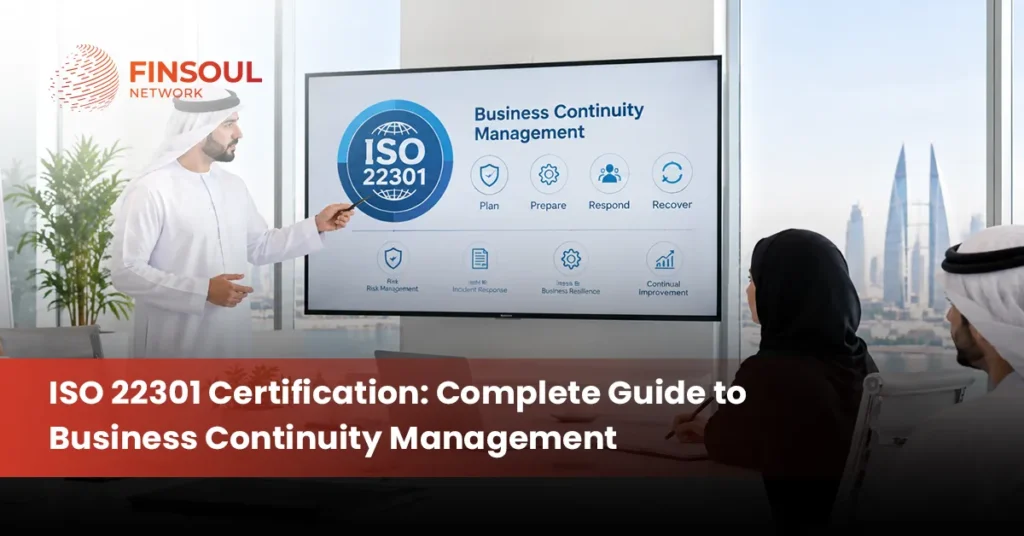
A single disruption, whether it’s a cyberattack, a supply chain breakdown, or a natural disaster, can shut down operations for days or weeks if a business isn’t prepared. That’s exactly the gap ISO 22301 certification in KSA is designed to close. Finsoul Network KSA put together this complete guide to explain what the standard covers, how the certification process works, and why more Saudi businesses are treating it as a core part of their risk strategy.
What Is ISO 22301?
ISO 22301 is the international standard for a Business Continuity Management System, or BCMS. It gives organizations a structured way to identify threats to their operations, plan for how they’ll respond, and recover quickly when something goes wrong. Rather than being reactive, businesses that build a bcms iso 22301 ksa program shift into a proactive posture, mapping out risks before they turn into full-blown crises.
Why It Matters for Saudi Businesses
The Kingdom’s rapid economic growth under Vision 2030 has brought more complex supply chains, more digital infrastructure, and more exposure to operational risk. Government tenders and large enterprise contracts increasingly list business continuity certification as a prerequisite, which means ISO 22301 certification in KSA has shifted from a nice-to-have into a genuine competitive requirement for vendors and contractors.
Core Components of the ISO 22301 Framework
Understanding the iso 22301 framework in ksa starts with knowing its main building blocks. Each component connects to the next, so skipping one usually weakens the whole system rather than just leaving a single gap:
- Context of the organization – identifying internal and external factors that could affect continuity
- Leadership commitment – ensuring top management actively supports the BCMS rather than delegating it entirely
- Business impact analysis (BIA) – determining which functions are critical and how quickly they need to be restored
- Risk assessment – identifying threats and vulnerabilities across people, processes, and technology
- Continuity strategies and plans – documented response and recovery procedures for different disruption scenarios
- Testing and exercises – regular drills to confirm plans actually work under pressure
- Continual improvement – updating the system based on lessons learned from tests and real incidents
Who Should Pursue This Certification
ISO 22301 isn’t limited to any single industry, and interest in ISO 22301 certification in KSA has grown across sectors that depend on uninterrupted service delivery. Organizations that typically benefit most include:
- Banks, insurers, and financial services firms
- Healthcare providers and hospital networks
- Manufacturing and logistics companies
- Government entities and public sector agencies
- Data centers, telecom, and IT service providers
- Retailers and e-commerce businesses with time-sensitive operations
The Certification Process, Step by Step
Achieving ISO 22301 certification in KSA generally follows this path:
Step 1: Gap Analysis
Assess your current continuity practices against the ISO 22301 requirements to identify what’s missing before you invest time in building out the full system.
Step 2: Business Impact Analysis and Risk Assessment
Map out your critical business functions, acceptable downtime for each, and the risks most likely to disrupt them.
Step 3: Build the BCMS Documentation
Develop policies, continuity plans, communication protocols, and recovery procedures that align with the standard’s requirements.
Step 4: Train Staff and Run Exercises
Everyone from leadership to frontline staff needs to understand their role during a disruption, which is best confirmed through simulated exercises.
Step 5: Internal Audit
Conduct an internal review to catch gaps before the external certification body arrives. Many organizations bring in an iso 22301 lead auditor ksa consultant at this stage to pressure-test documentation against the exact clauses an external assessor will check.
Step 6: Certification Audit
An accredited body performs a two-stage audit, first reviewing documentation, then assessing implementation on-site or remotely. Passing this stage confirms your organization has met the requirements for ISO 22301 certification in KSA and can move forward with formal registration.
Certification Stages Compared
| Stage | Focus Area | Typical Duration |
| Stage 1 Audit | Documentation review and readiness check | 1–2 days |
| Stage 2 Audit | On-site implementation and evidence review | 2–4 days |
| Surveillance Audit | Ongoing compliance check (annual) | 1 day |
| Recertification Audit | Full system review every 3 years | 2–3 days |
The Role of an ISO 22301 Lead Auditor
Working with a qualified iso 22301 lead auditor ksa professional makes a measurable difference in how smoothly certification goes. A lead auditor brings hands-on experience interpreting the standard’s clauses, spotting documentation gaps early, and preparing your team for exactly what an external assessor will look for. Many businesses bring in lead auditor expertise during the internal audit stage specifically to avoid surprises during the official certification audit.
Common Challenges Businesses Face
Building out a bcms iso 22301 ksa program is rarely without friction. Frequent obstacles include:
- Underestimating how long a proper business impact analysis takes
- Treating continuity planning as an IT-only concern instead of an organization-wide responsibility
- Writing continuity plans that look good on paper but have never been tested
- Losing momentum after initial certification instead of maintaining the system
- Struggling to get consistent buy-in from department heads outside of leadership
- Assuming existing insurance coverage or IT backups already satisfy continuity requirements, when they typically address only a narrow slice of what the standard expects
Benefits of ISO 22301 Certification
Organizations that commit to the iso 22301 framework in ksa typically see returns beyond just passing an audit:
- Faster recovery times when disruptions do occur, minimizing revenue loss
- Stronger eligibility for government and enterprise contracts that require certification
- Improved stakeholder and investor confidence in operational resilience
- Better coordination across departments during high-pressure situations
- A documented, defensible response plan that supports insurance and regulatory conversations
How Long Does the Process Take?
For most mid-sized organizations, reaching ISO 22301 certification in KSA takes between four and nine months, depending on how mature existing continuity practices already are and how quickly documentation and training can be completed. Organizations starting from scratch should budget closer to the longer end of that range.
Maintaining Certification After You Achieve It
Earning ISO 22301 certification in KSA is not a one-time achievement. Certified organizations go through annual surveillance audits to confirm the BCMS is still functioning as designed, and a full recertification audit every three years. Between audits, the system needs regular exercises, updated risk assessments, and documentation reviews so it reflects how the business actually operates rather than how it looked on the day of the original audit. Organizations that treat this as an ongoing discipline, rather than a certificate to file away, tend to recover from real disruptions far more smoothly than those that let their bcms iso 22301 ksa program go stale between audits.
Final Thoughts
Business continuity isn’t something to figure out in the middle of a crisis. Organizations that invest in ISO 22301 certification in KSA ahead of time build the muscle memory and documented processes needed to respond calmly when disruption hits, rather than scrambling under pressure. Finsoul Network KSA supports businesses through every stage of this journey, from initial gap analysis to full certification and ongoing surveillance audits, making resilience a practical, achievable goal rather than an abstract one.
Strengthen Your Business Continuity Strategy
Don’t wait for a cyberattack, supply chain disruption, or unexpected crisis to expose weaknesses in your continuity plans. Get your BCMS assessed, identify critical gaps, and prepare your team for ISO 22301 certification with a structured approach. From gap analysis and risk assessment to documentation, internal audits, and certification preparation, Finsoul Network KSA can help you build a business continuity system that works when your organization needs it most.
Contact the team today to discuss your ISO 22301 requirements and take the next step toward stronger operational resilience.
Our Location
Office 201 (4th Floor), SQ Tower, GCC Road, Al Khuzamah, Eastern Province, Al Khobar, Kingdom of Saudi Arabia
Email
info@finsoulnetwork.com
Contact
+966 54 865 6146
Frequently Asked Questions
How long is an ISO 22301 certificate valid for?
Certificates are typically valid for three years, with annual surveillance audits required to maintain certified status.
Do small and medium businesses need ISO 22301 certification?
While larger enterprises pursue it most often, SMEs handling critical services or seeking government contracts increasingly need it too.
What’s the difference between ISO 22301 and a basic disaster recovery plan?
A disaster recovery plan usually covers IT systems specifically, while ISO 22301 covers the entire organization’s ability to continue operating, including people, facilities, and suppliers.
Can one person manage the entire BCMS implementation?
It’s possible for smaller organizations, but most benefit from a dedicated team plus guidance from an experienced lead auditor who has been through the certification process before.
Is ISO 22301 certification mandatory in Saudi Arabia?
It isn’t legally mandatory across all sectors, but it’s increasingly required for government tenders and large corporate partnerships.