
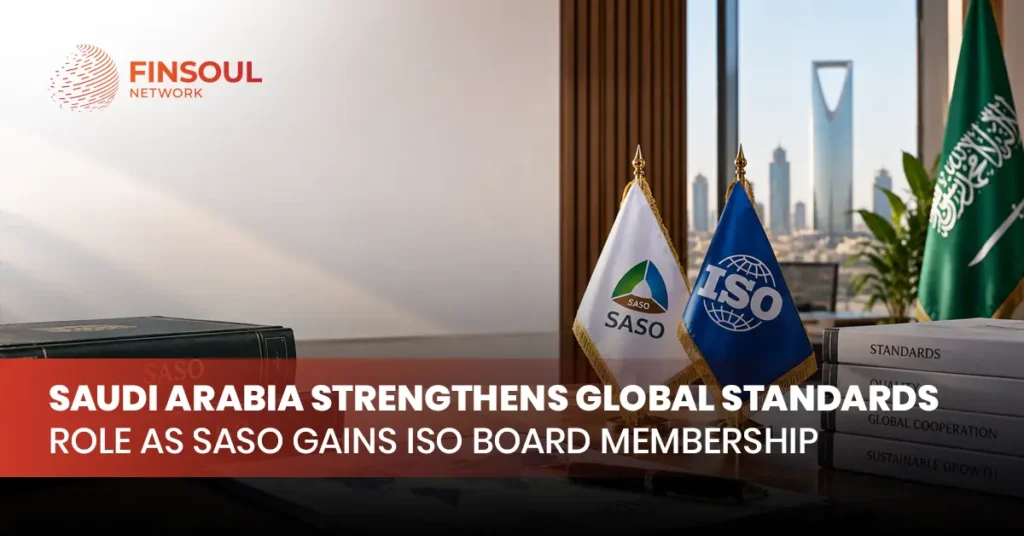
Saudi Arabia has taken another visible step onto the world stage of technical standard-setting. The SASO ISO board membership win confirms the Kingdom’s growing weight inside the International Organization for Standardization, and it arrives at a moment when Saudi exporters, regulators, and investors are all watching how global product and quality standards get written. Finsoul Network KSA has been tracking this development closely, since it directly affects how our clients plan compliance strategy across Gulf and international markets.
What Happened
The Saudi Standards, Metrology and Quality Organization (SASO) secured a seat on ISO’s Technical Management Board, which oversees technical committees and influences the development of international standards.
This follows SASO’s election to the ISO Council for the 2024–2026 term in 2023. Together, these positions give Saudi Arabia influence at both the governance and technical levels of ISO.
The SASO ISO board membership reflects SASO’s growing role in regional and international standardization and strengthens Saudi Arabia’s position in global standards development.
How Saudi Arabia Earned the Seat
The Saudi Arabia ISO board membership track record didn’t happen overnight. SASO’s delegation has spent years building relationships with national standards bodies across Europe, Asia and the Gulf, using ISO’s general assembly meetings to hold bilateral talks on technical cooperation long before any vote took place. That groundwork, combined with the Kingdom’s growing industrial base and export ambitions under Vision 2030, gave SASO a credible case for a seat that technical committee members from other countries were willing to back.
This pattern of steady, relationship-first positioning is fairly typical of how SASO ISO board membership outcomes get decided at ISO. Votes are rarely won on a single application; they tend to reflect years of technical contribution, hosting standards forums, and demonstrating consistent regulatory competence at home.
Why This Matters
| Position | Term | What It Controls |
| ISO Council seat | 2024–2026 | Strategic direction and governance of ISO as a whole |
| ISO Technical Management Board seat | 2026–2028 | Oversight of technical committees that draft individual standards |
Holding both seats means Saudi representatives now sit at the table when decisions are made about which industries get new standards, how fast those standards move through committee, and how compliance requirements evolve globally. For a country pursuing Vision 2030’s industrial diversification goals, that’s not a symbolic detail it’s a genuine lever over the rules its own exporters, and everyone else’s, will eventually have to follow.
Background: SASO’s Standing Since 1972
SASO’s long-standing role in international standardization has helped Saudi Arabia build greater influence in global standards and regulatory development.
SASO’s Membership in ISO
SASO has been a member of ISO since 1972, the same year it was established under Saudi royal decree.
SASO’s Role in Saudi Standardization
Over five decades, it has grown from a domestic standards regulator into the Kingdom’s competent authority for standardization, metrology, and quality across virtually every regulated product category, from lighting and electronics to food safety and industrial machinery.
International Standards Collaboration
The organization also holds active membership in the International Electrotechnical Commission, giving it a parallel voice in global electrical and electronic standards.
SASO’s Leadership and Institutional Influence
SASO’s board of directors is headed by the Minister of Commerce, with representation from the major industrial and commercial sectors most affected by standardization decisions. This broad representation has helped strengthen SASO’s institutional credibility and international influence, including its current SASO ISO board membership.
Saudi Arabia’s Growing Role in Global Standard-Setting
The development of Saudi Arabia ISO board membership reflects the Kingdom’s broader push to become a rule-shaper rather than simply a rule-taker in international trade, a shift that has accelerated since 2020.
What It Means for Businesses
For companies trading with or operating inside Saudi Arabia, SASO standards Saudi Arabia requirements are not static. A seat on the Technical Management Board means SASO will have earlier visibility into, and influence over, upcoming international standards before they’re finalized. Practically, that could translate into:
- Earlier alignment between Saudi national standards and emerging ISO standards, reducing duplicate compliance work
- Greater weight given to Gulf-region industrial and product realities during standard drafting
- Faster adoption cycles for new international standards inside the Kingdom once they’re published
- Stronger mutual recognition prospects between Saudi certification and international certification schemes
Exporters into Saudi Arabia should treat this as a signal to review compliance roadmaps rather than assume current SASO requirements will stay fixed through the technical board’s term. The practical takeaway from SASO ISO board membership is straightforward: businesses that build in regular compliance reviews now will adapt faster than those that wait for regulations to change before responding.
How SASO Compares to Other Regional Standards Bodies
Among Gulf and wider Middle Eastern standards organizations, SASO standards Saudi Arabia authority, now carries more institutional weight at ISO level than most of its regional peers. Few national bodies in the region hold a simultaneous Council seat and Technical Management Board seat, which puts SASO in a small group of standards organizations globally with influence over both the strategic and technical layers of ISO’s work. This dual standing tends to translate into faster domestic adoption of new international standards, since SASO’s own technical staff are directly involved in drafting them rather than waiting to receive finished standards from Geneva.
For manufacturers and exporters comparing regulatory environments across the Gulf, this is one more reason SASO standards Saudi Arabia requirements are increasingly treated as a regional benchmark rather than simply one country’s local rules among several.
Regional and Trade Implications
Saudi Arabia’s expanding footprint inside ISO governance also strengthens its negotiating position within the Gulf Cooperation Council’s own standardization efforts, where member states frequently look to SASO’s technical expertise as a reference point. A stronger Saudi voice at ISO level tends to filter down into GCC-wide technical regulations over time, which matters for any business planning a multi-country Gulf market entry rather than a single-country one.
This is part of why regional trade advisors increasingly flag SASO ISO board membership developments to clients even when their operations sit outside Saudi Arabia itself. Standards agreed at ISO level, with Saudi input now built into the drafting process, have a habit of eventually shaping requirements across the whole GCC bloc, not just the Kingdom.
Companies already certified against Saudi technical regulations should also expect more frequent updates to guidance documents over the next term, simply because SASO’s technical staff will be closer to the source of new international standards as they’re drafted, rather than adapting them after publication.
SASO Latest News 2026: What Comes Next
Watching SASO latest news 2026 closely is now sensible practice for compliance and trade teams, since committee-level decisions made this term could reshape technical requirements across several sectors before the 2028 term ends. SASO’s delegation has historically used these platforms to hold bilateral meetings with other national bodies, often previewing where future standardization cooperation is headed before it becomes public policy.
Closing Thoughts
The SASO ISO board membership result is a clear marker of how far Saudi Arabia’s standardization system has come since 1972, and it puts the Kingdom in a genuine position to help shape international rules rather than simply follow them. Businesses operating across Saudi Arabia and the wider Gulf should treat this as a prompt to revisit compliance planning rather than a piece of background news. Finsoul Network KSA works with companies navigating exactly this kind of regulatory shift, helping clients stay ahead of changing standards rather than reacting to them after the fact.
Stay Ahead of Changing SASO Standards
As Saudi Arabia takes a stronger role in international standard-setting, businesses need to stay prepared for evolving compliance requirements. Finsoul Network KSA helps companies review their current compliance position, understand changing SASO standards Saudi Arabia requirements, and prepare for future regulatory updates.
Get in touch today to strengthen your compliance strategy and stay ready for what’s next.
Our Location
Office 201 (4th Floor), SQ Tower, GCC Road, Al Khuzamah, Eastern Province, Al Khobar, Kingdom of Saudi Arabia
Email
info@finsoulnetwork.com
Contact
+966 54 865 6146
Frequently Asked Questions
What is SASO?
SASO is the Saudi Standards, Metrology and Quality Organization, the Kingdom’s national body for standards, metrology and quality regulation since 1972.
What does ISO Technical Management Board membership actually involve?
It means SASO representatives help oversee ISO’s technical committees, influencing how new international standards are developed and prioritized.
Does this affect products already certified under SASO regulations?
Not immediately, but businesses should expect faster alignment between Saudi and international standards over the coming term.
How is this different from SASO’s earlier ISO Council seat?
The Council seat covers overall governance and strategy, while the Technical Management Board seat covers oversight of technical standards development.
Why does SASO ISO board membership matter for exporters?
It gives Saudi Arabia earlier influence over standards that exporters will eventually need to comply with, making early compliance planning more valuable.